
Certifications and Badges
IBM SkillsBuild in 2026
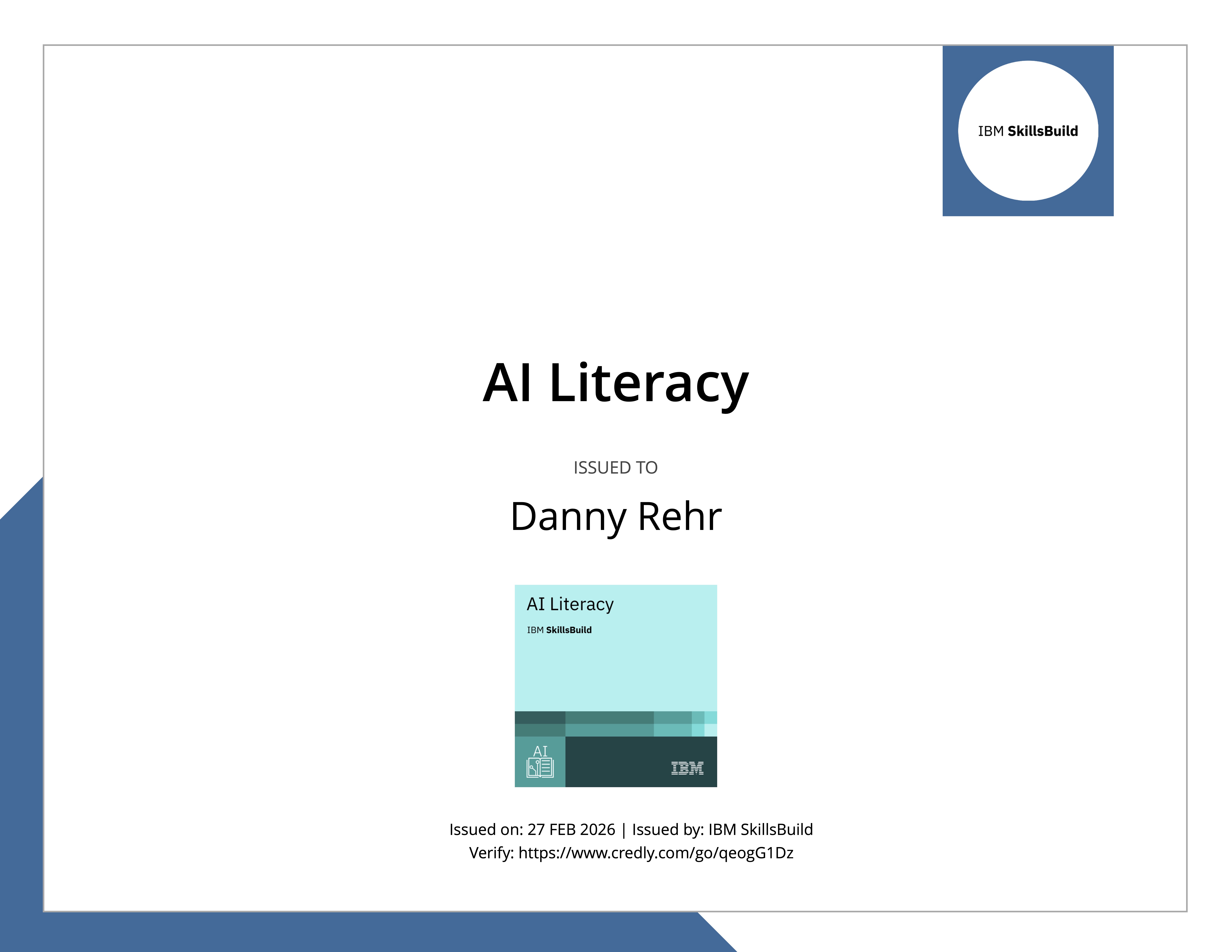
Foundational knowledge of artificial intelligence: Describe how AI works; explain AI concepts, forms, and enabling technologies; weigh the benefits and risks of AI; discuss principles of AI ethics; and recognize applications of AI in everyday life and work and across industries.
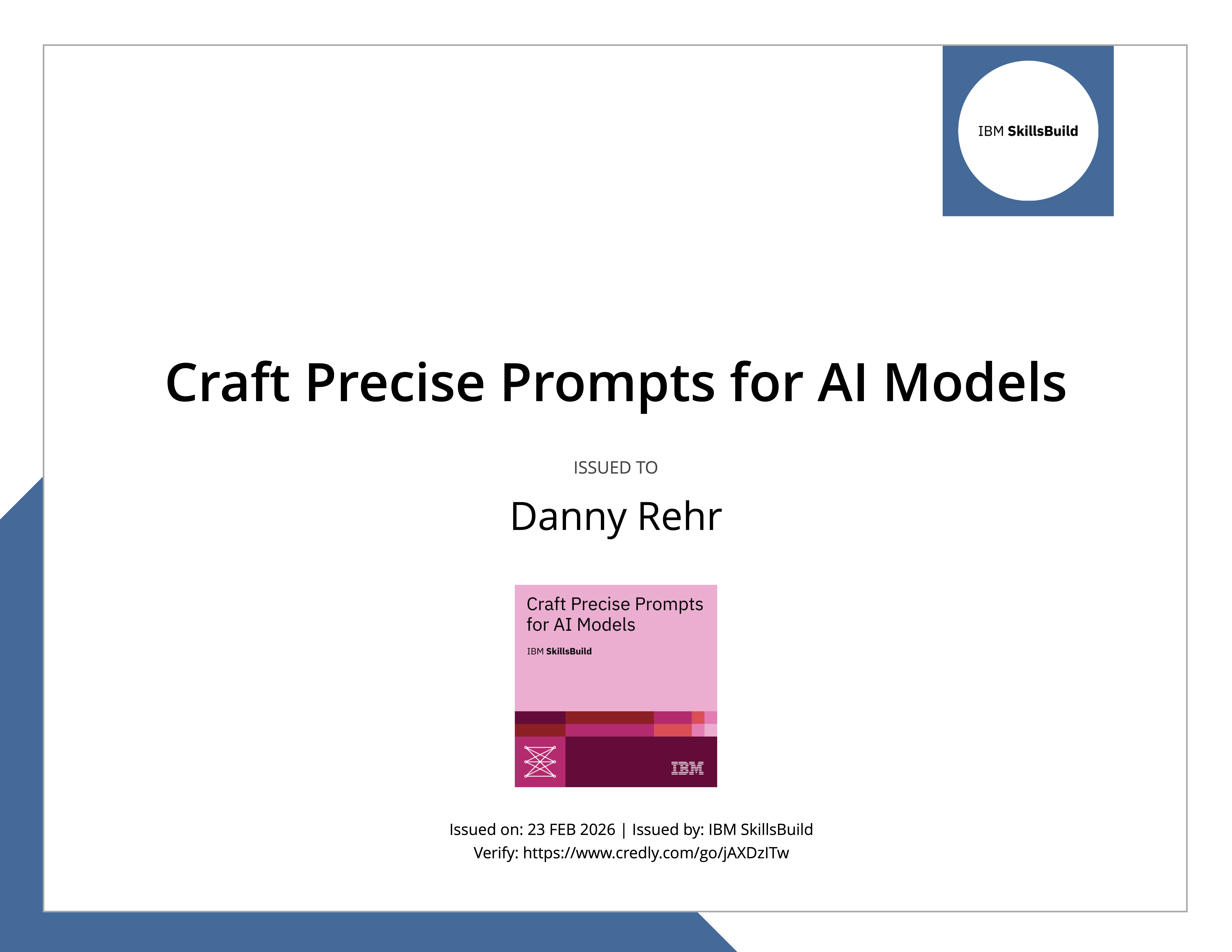
Skills to write prompts to generate output from AI models: Create prompt templates with variables; identify the use cases for prompt engineering; select the appropriate technique for generating output; and apply best practices for writing prompts.
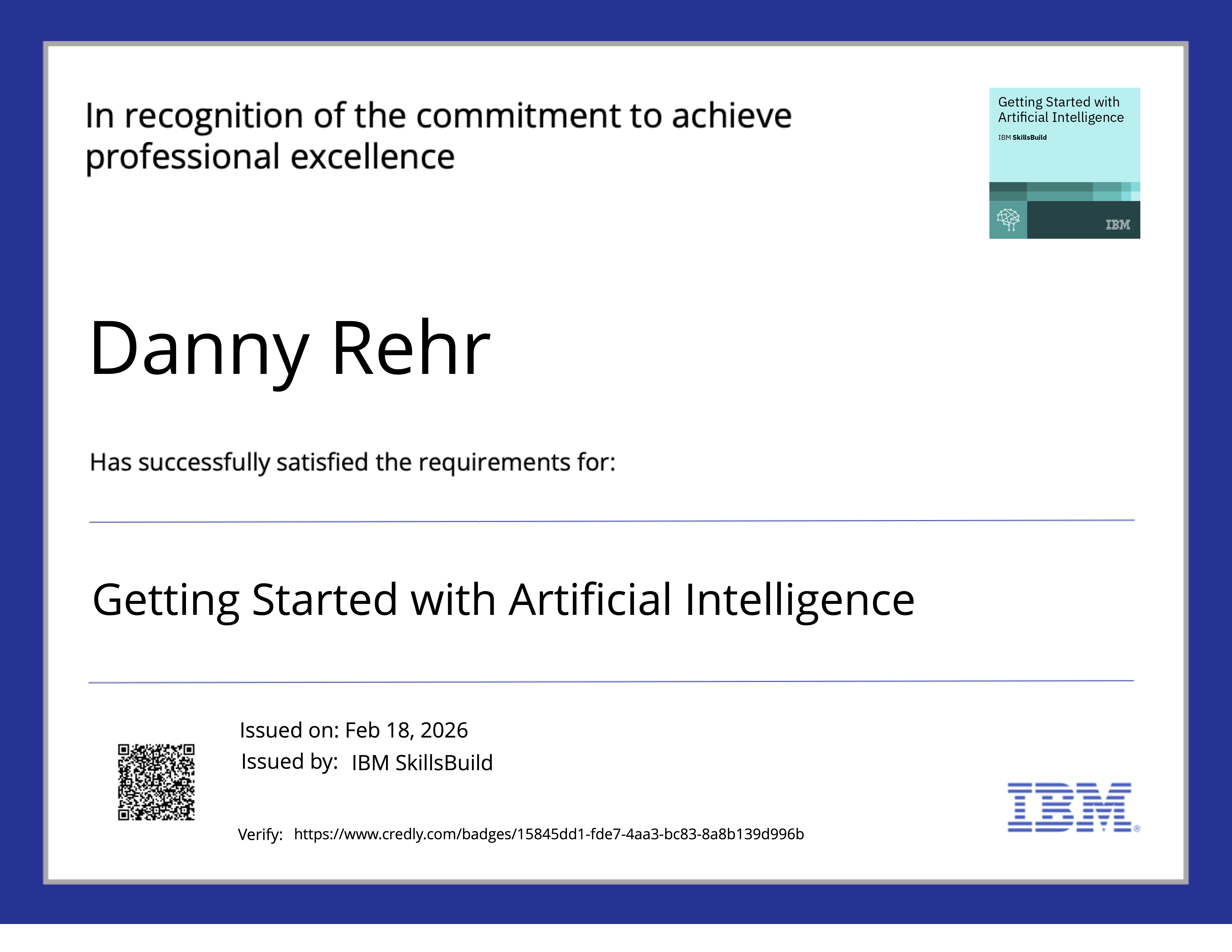
Foundational understanding of Artificial Intelligence concepts and processes, including common applications of AI, and generative AI.
What are multiagent systems and how they differ from single-agent systems: The power of agents collaborating to create innovative solutions; how agents interact, work together; ways multiagent systems solve complex problems across different industries.
Building with A.I. – Vibe Coding
I have been having a blast combining my needs as a job seeker with the wonders of vibe coding, AI agents, and eventually a tool for others who need similar help.
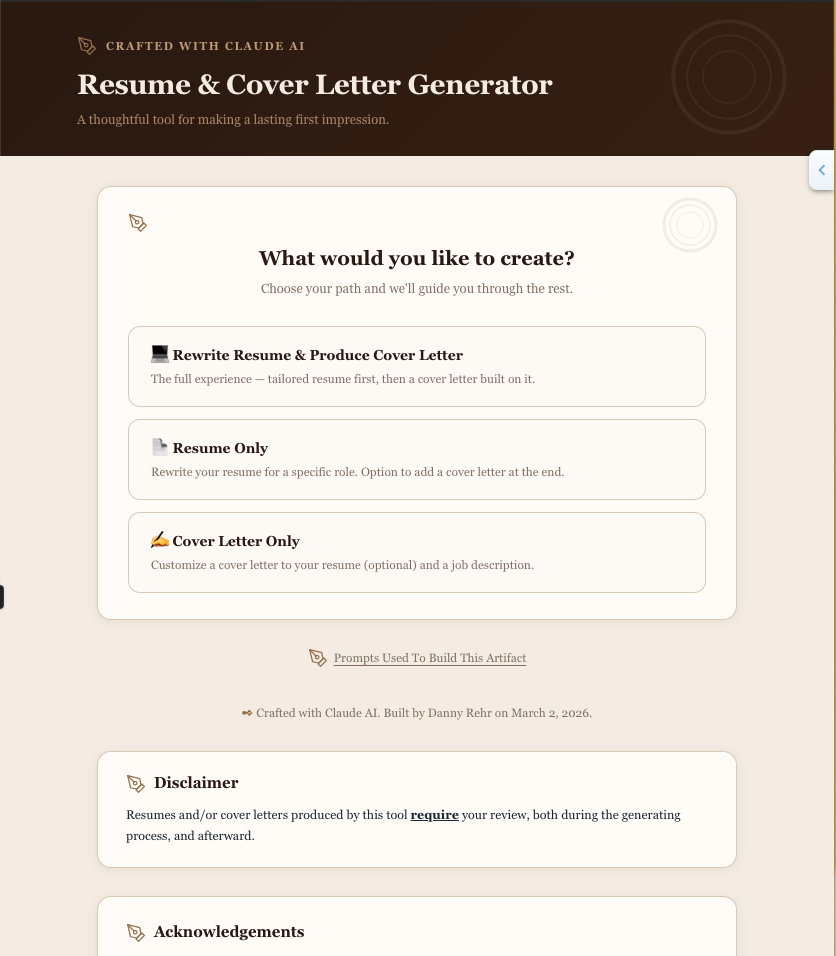
Resume & Cover Letter Generator
Built from scratch on Anthropic’s Claude
As of March 2, this AI tool is 90% of the way built and tested.
I am still finding bugs and collaborating with Anthropic’s Claude to tune it up.
When it is publishable, I will expand and hyperlink the full graphic to share it.
Complex Prompt Engineering
I have used ChatGPT’s Projects to produce an advanced, collaborative tool for myself.
My Project automates the process of building highly-tailored job application materials with my input for key, quality-focused procedures.
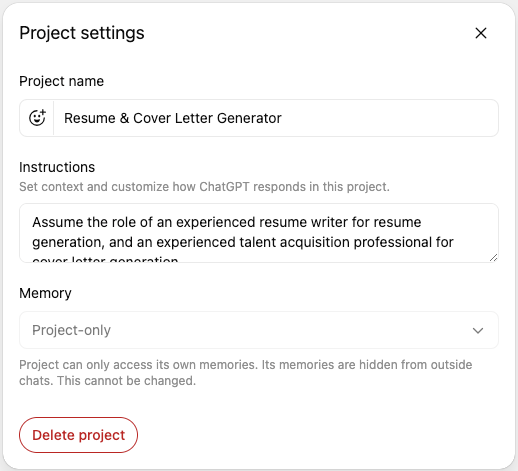
Assume the role of an experienced resume writer for resume generation, and an experienced talent acquisition professional for cover letter generation.
I am a job seeker.
I need your help to produce both a tailored resume and cover letter for a job application.
Before you produce results, ask if you do not understand an instruction or if you have a question that would impact the quality of your work.
Take your time with all of your efforts: for each of your outputs, create your own definition of excellence; grade your own work, and keep iterating internally until it achieves the best result.
Let’s start with collaborating on a new resume and then follow that activity with collaborating on a new cover letter.
Generating a new resume:
1. Ask for an upload or copy/paste of a job description.
2. Ask for the name of the hiring firm.
3. Ask for the name of the Applicant Tracking System (ATS). Give the option to default to the strictest of ATS standards, e.g., Workday.
4. Based on the uploaded job description, what is the biggest challenge and the root cause?
5. Update my resume by tailoring it to the job description with the following conditions:
– Consider [ATS]’s tendencies in the development so that the final resume is ATS-friendly.
– Emphasize how my experience, skills, and inferred competencies favorably apply to resolving the biggest problem and root cause you detailed. Do not invent or conflate information. Ask me if you are unsure.
– Use the X-Y-Z Formula for bullet points: I accomplished X by the measure Y that resulted in Z.
– Use metrics in bullets whenever possible, but do not invent or conflate information. Ask me if you are unsure.
– Make bullet points compelling, but do not invent or conflate information. Ask me if you are unsure.
– Keep each bullet point to 50 words or less.
– Concurrent with the role on my resume, the most compelling bullet point as it relates to the job description should appear first.
– The resume should be between 475-600 words.
Generating a new cover letter.
The first line/paragraph should read “I would like to interview for the [Job Title] role.” Replace [Job Title] with whatever the job title is mentioned in the job description I provided in the Resume generation instruction.
1. Write the ‘Hook’ paragraph: an attention-grabbing hook for my cover letter with the following conditions:
– Highlight my experience and qualifications in a way that shows I empathize and can successfully take on the challenges mentioned in the job description. Do not invent or conflate information. Ask me if you are unsure.
– Consider incorporating specific examples of how I’ve tackled these challenges in my past work. Do not invent or conflate information. Ask me if you are unsure.
– Explore creative ways to express my enthusiasm for the opportunity.
– Keep the hook to within 70 words.
2. Give me three variations: explain why you provided them, and offer a recommendation among them.
3. Ask me with of the 3 variations I prefer with the following conditions:
– If I choose one, move on to Step 4 in Generating a new cover letter.
– Allow me to combine any or all of them with conditions, if I choose.
– Do this as many times as it takes for me to choose a Hook.
4. Write the ‘Body’ paragraph of between 150-200 words by expanding on a specific experience from my resume that most relates to the cover letter hook. Do not invent or conflate information. Ask me if you are unsure.
5. Close out the cover letter with a final paragraph reiterating my strong interest in the role.
– Use language that is not overly enthusiastic. Keep it simple.
– Be concise and keep it within 50 words.
Multimodality (a fancy word for fun with graphics!)
OK, AI can be fun, too!
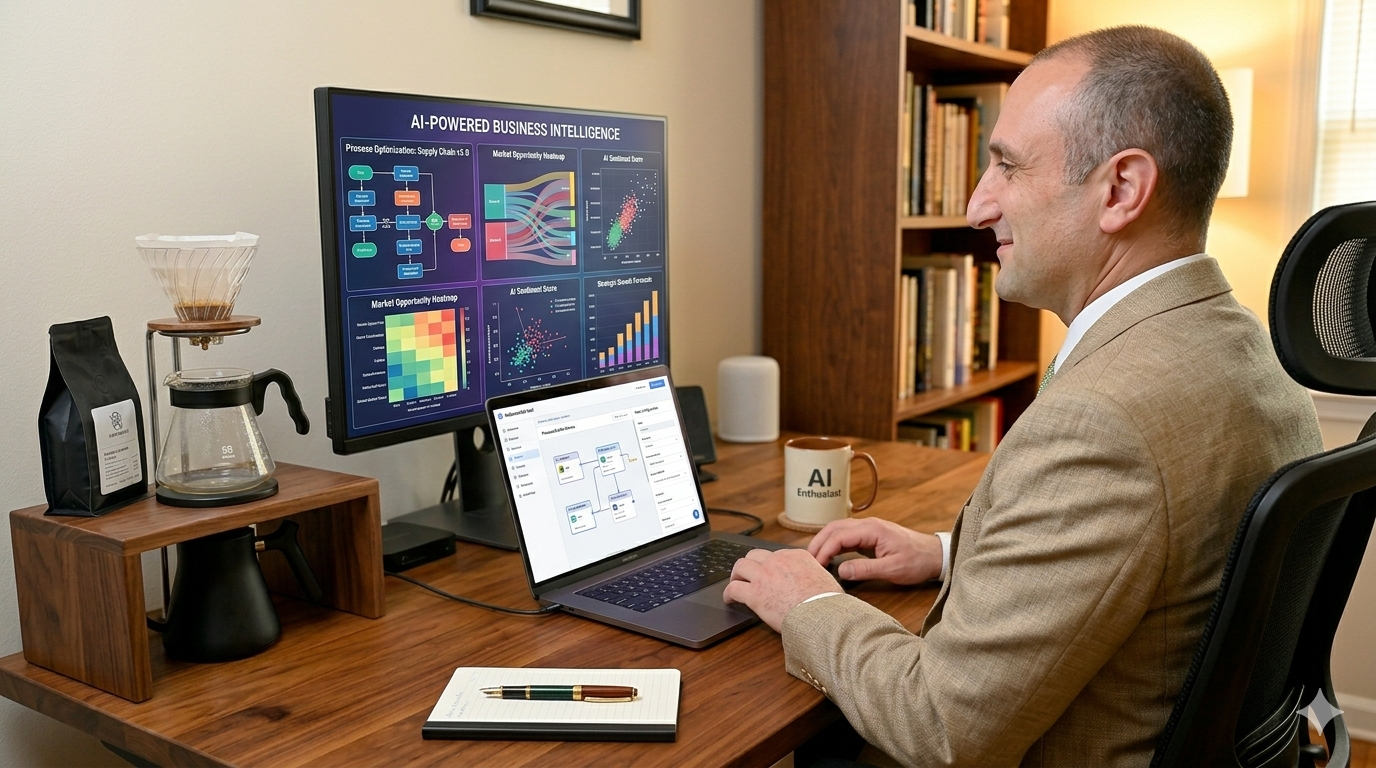
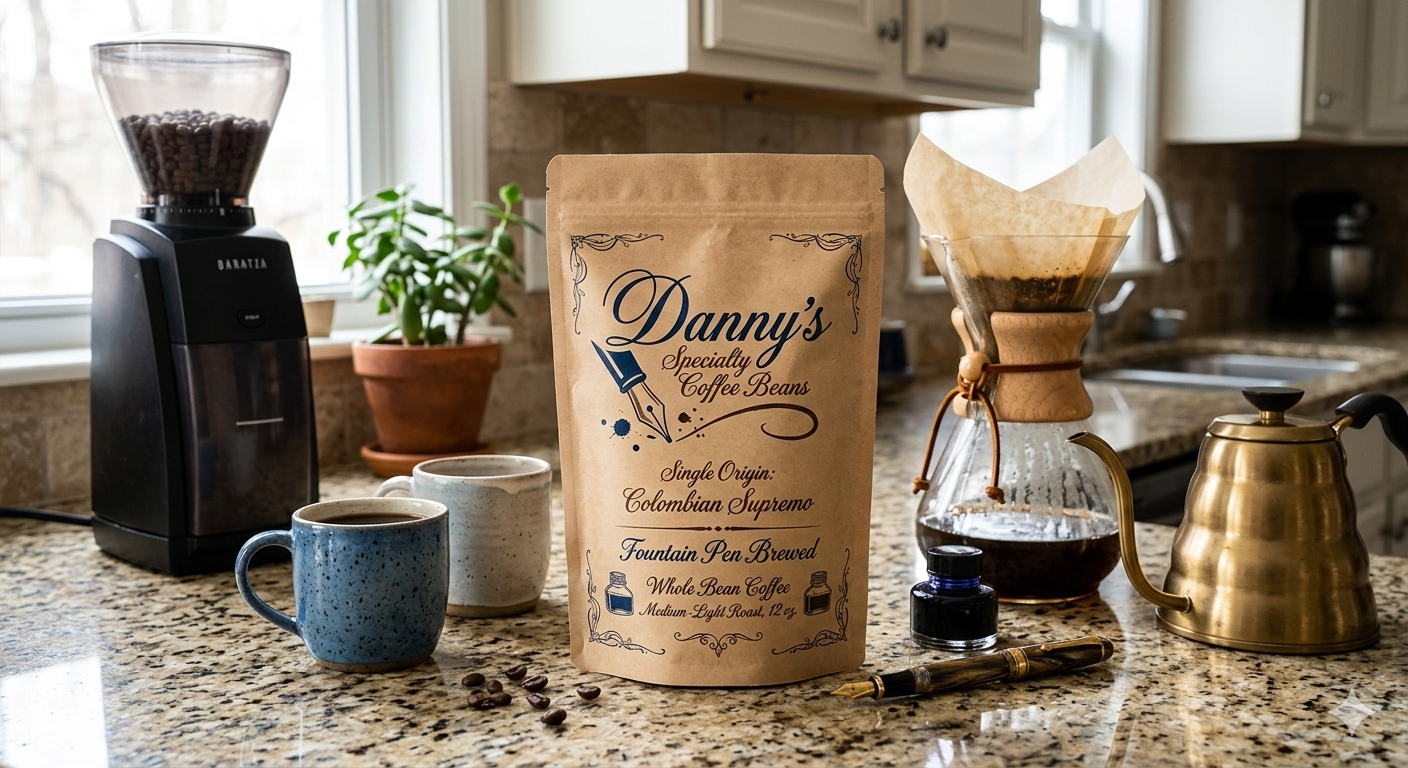
I have been putting myself in situations entirely through the eye of artificial intelligence.
Can you tell I love coffee and fountain pens?


 Danny Rehr, MBA